Prototype
Deal spaces
A shared workspace for closing a transaction. Each deal space holds the closing agenda and every document behind it. Each firm on the deal keeps its own working drafts private until it chooses to circulate a version, at which point the version goes into a shared negotiation record where every firm can see the history, open any version, and produce a redline between any two.
- Input
- A closing agenda, and each firm's working drafts
- Output
- One shared agenda, a version history per item, Word blacklines
- Parties
- Any number of firms on one matter
- Built
- 2026
Why I built it
Closing an M&A transaction is run off a closing agenda: a long table of every document and deliverable, who is responsible for it, who signs it, and where it stands. In practice the agenda lives in a Word document that one firm owns and re-circulates, the drafts themselves travel by email, and version control comes down to filename conventions and memory. Working out which draft is current, what changed since the other side's last turn, and whether the agenda reflects any of it takes a surprising share of a junior lawyer's time in the last weeks of a deal.
In a complex deal with multiple parties across several jurisdictions, just managing the closing agenda and deliverables can take literally hundreds of hours in legal time, which equates to a very expensive bill for clients. Managing the endless versions and markups is not high-value legal work; it is merely an artifact of using software and tools that are not appropriate for the task.
The tool puts the agenda and the documents in one place, so that the status of an item, its current draft, and the history of how it got there live in the same record, rather than relying on lawyers sending email attachments, managing complex version control, and constantly integrating comments from all the different parties, local and opposing counsel included.
What it does
A deal space is created per matter. The prototype seeds one matter with three firms — buyer's counsel, seller's counsel and local counsel — and a switcher in the top bar stands in for login, so the tool can be viewed as any user at any firm.
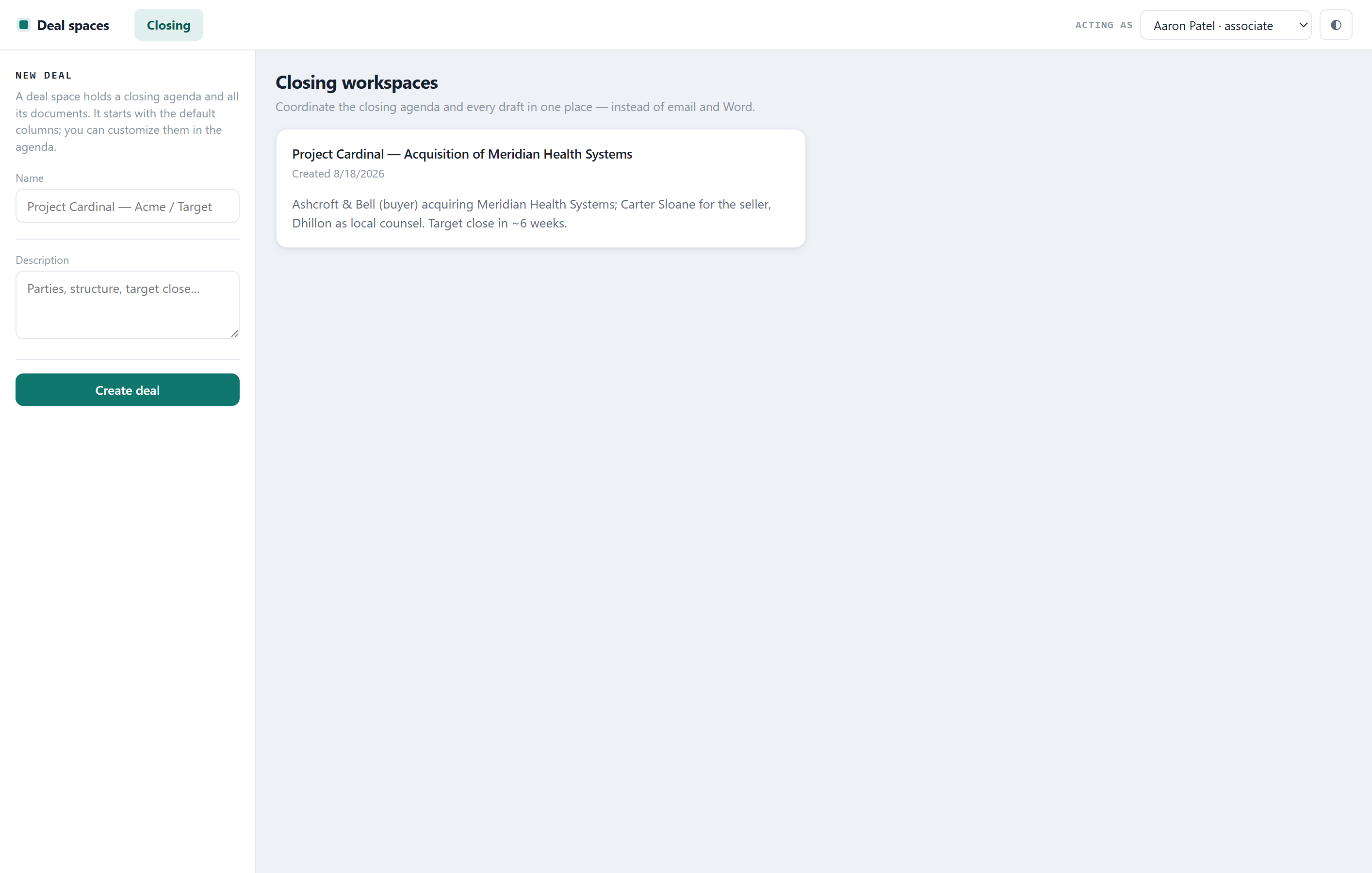
The agenda is an editable table. Rows nest (I, I.1, II.3.a), the columns are customisable, and each row carries its responsible party, signatories and status. Where a document has been uploaded against a row, the row shows its current version, the number of versions behind it, and a link into the shared review thread.
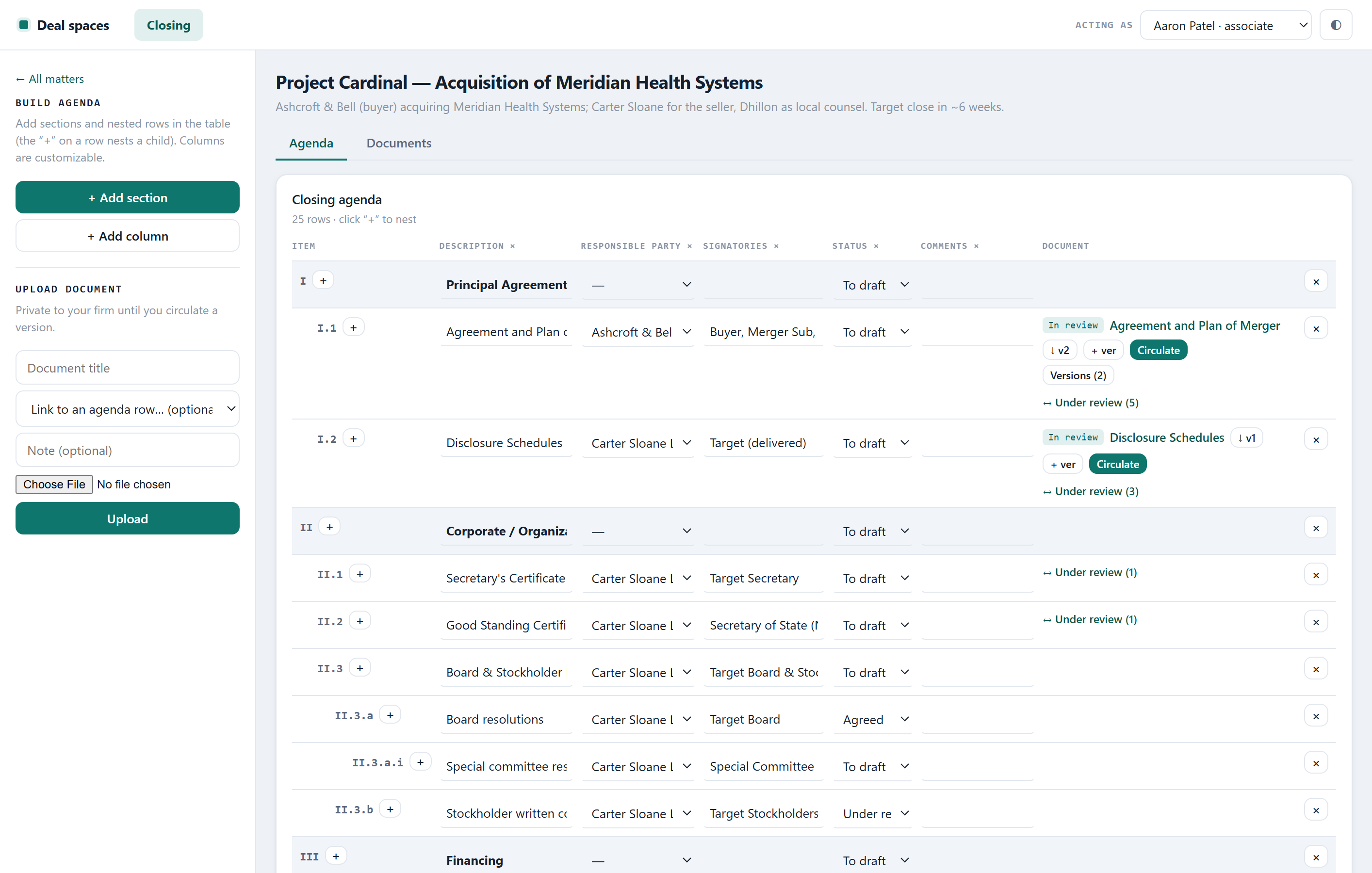
Each firm has a private box of documents. Drafts and new versions can be uploaded there without any other firm seeing them. Circulating a version pushes it into Under Review, where it becomes visible to every firm on the matter.
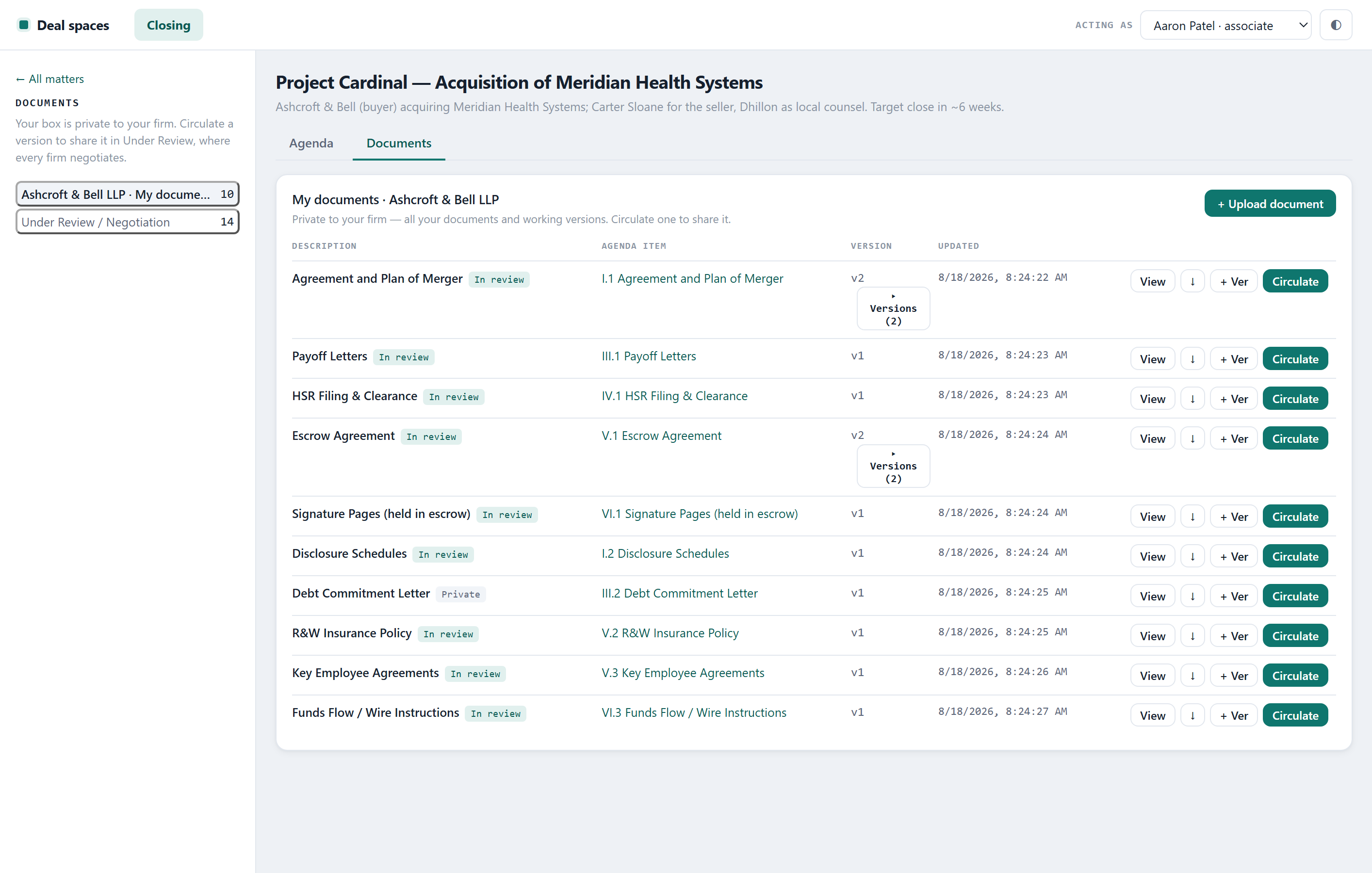
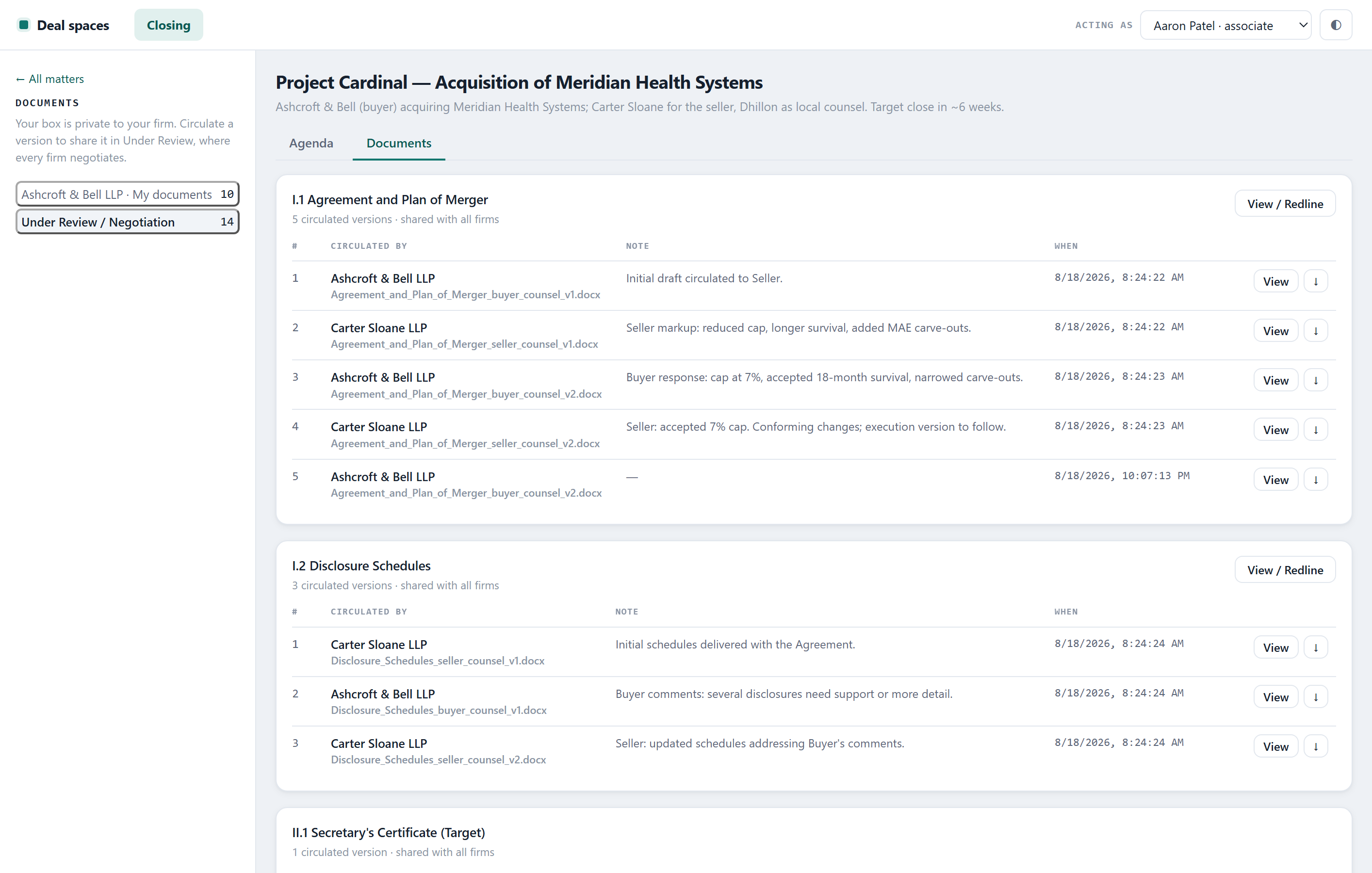
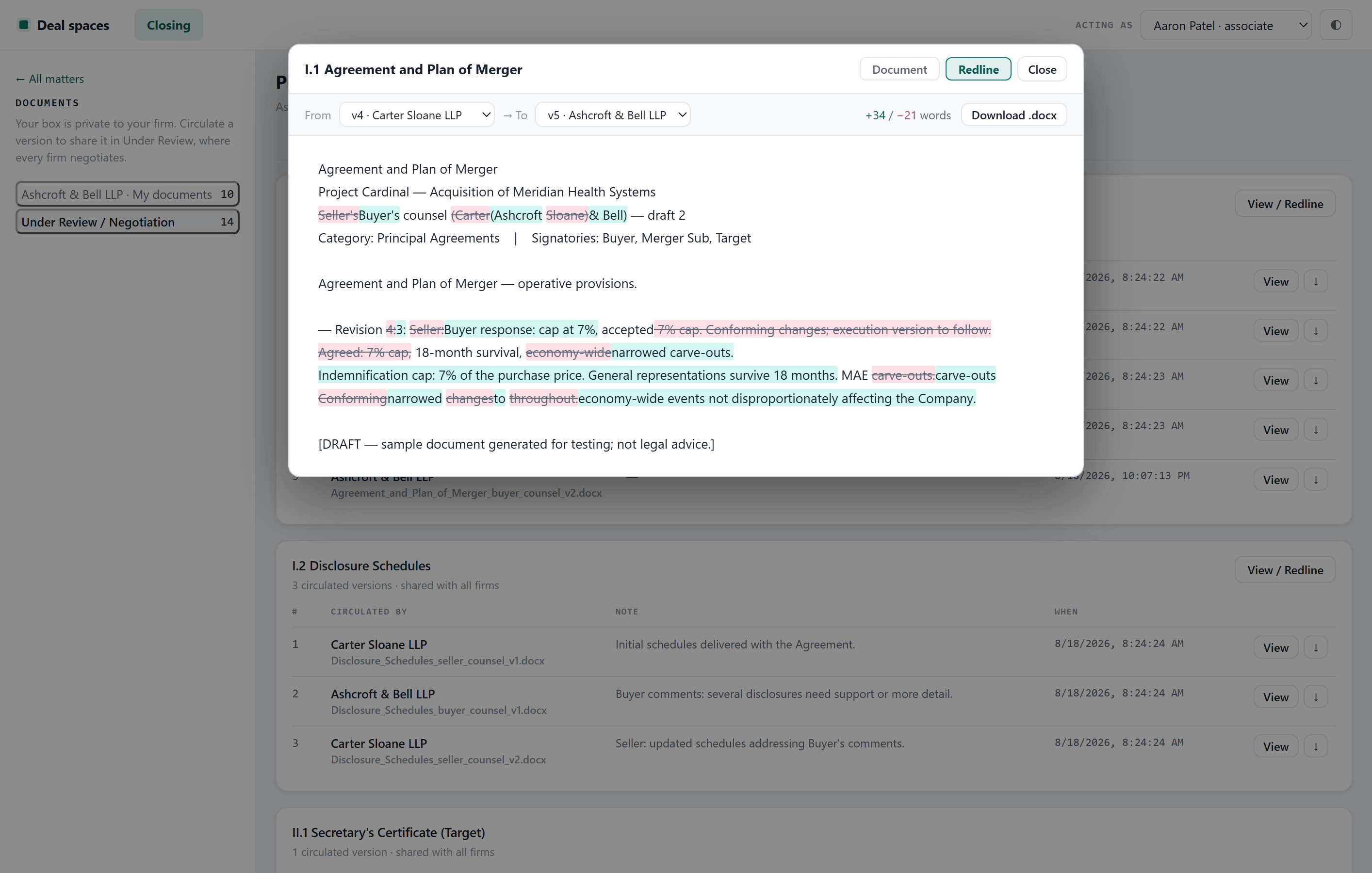
Any version can be opened in the browser. From the same viewer, any two circulated versions can be redlined against each other, and the redline downloaded as a Word blackline.
How it was built
Built in Python and React with the help of Claude Code. Source is not public, but I am happy to walk through it.